
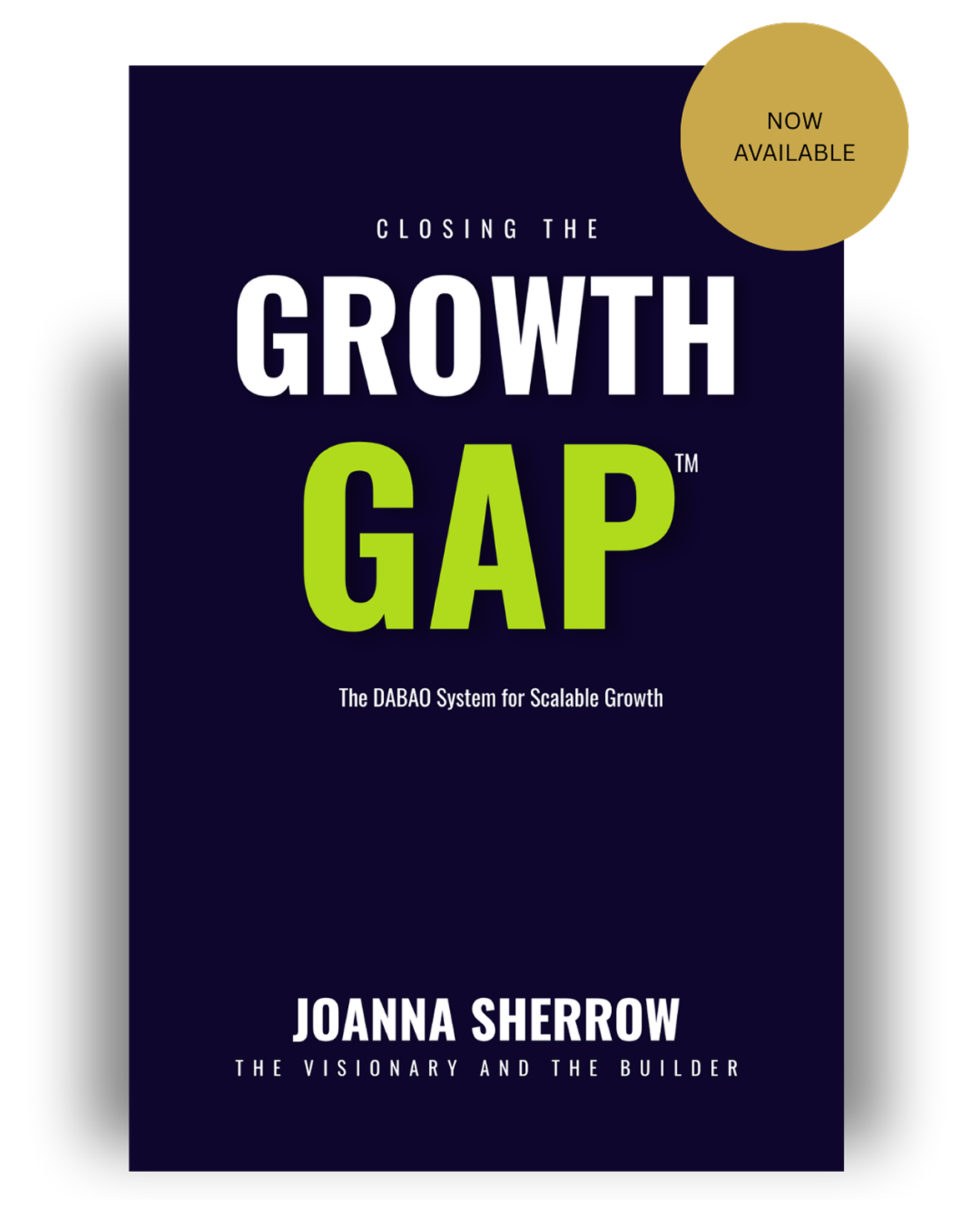
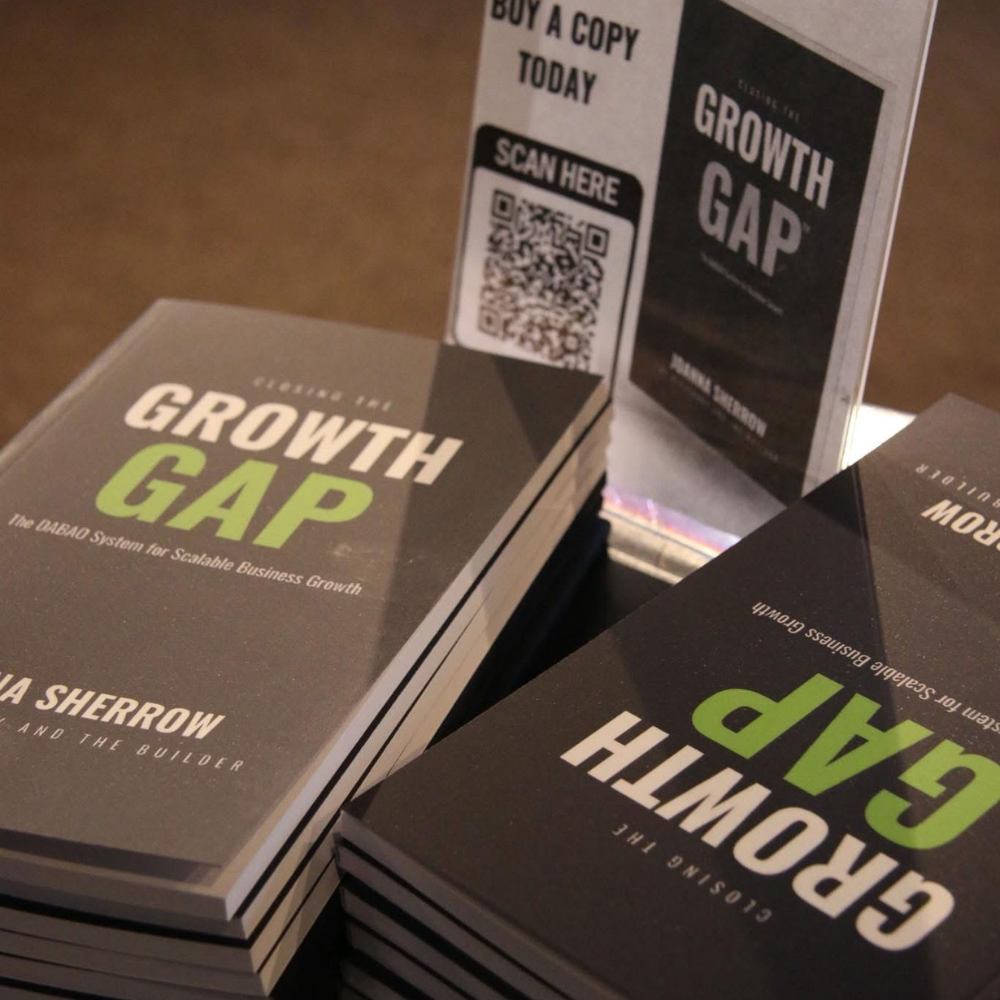
Closing the Growth Gap
Closing the
Growth Gap
The D.A.B.A.O. System for Scalable Business Growth
The D.A.B.A.O. System for Scalable Business Growth
Most business owners do not have a marketing problem. They have an architecture problem. This book is the diagnostic and implementation framework that shows you exactly where your business is leaking momentum — and what needs to be built to close it for good.
Most business owners do not have a marketing problem. They have an architecture problem. This book is the diagnostic and implementation framework that shows you exactly where your business is leaking momentum and what needs to be built to close it for good.
AUTHOR
Joanna Sherrow
PUBLISHER
SavvyChic Design, LLC
AVAILABLE
Amazon . 2026
AVAILABLE
Amazon . 2026
ISBN
979_8_218_84718_0
ISBN
979_8_218_84718_0
Closing the Growth Gap
Closing the
Growth Gap
The D.A.B.A.O. System for Scalable Business Growth
The D.A.B.A.O. System for Scalable Business Growth
Most business owners do not have a marketing problem. They have an architecture problem. This book is the diagnostic and implementation framework that shows you exactly where your business is leaking momentum and what needs to be built to close it for good.
Most business owners do not have a marketing problem. They have an architecture problem. This book is the diagnostic and implementation framework that shows you exactly where your business is leaking momentum — and what needs to be built to close it for good.
AUTHOR
Joanna Sherrow
PUBLISHER
SavvyChic Design, LLC
AVAILABLE
Amazon . 2026
AVAILABLE
Amazon . 2026
ISBN
979_8_218_84718_0
ISBN
979_8_218_84718_0
- READER RECOGNIZE
- READER RECOGNIZE
Three founder moments
of recognition.
Three founder moments
of recognition.
I finally had a name for the problem I had been trying to solve for three years.
Reader · High-Performance Coach
This is not a motivational book. It is a diagnostic. And that is exactly what I needed.
Reader · Expert Consultant
Read it in one sitting. Took the Gap Scan that same night. Called Joanna the next morning.
Reader · Mastermind Leader
— ABOUT THE BOOK
The diagnosis your
business has been
waiting for.
Every expert-led business reaches a point where growth stops feeling like progress. Leads come in. Clients pay. The reputation is real. But the business only holds together because the founder is personally holding it — every decision, every relationship, every operational move routes through one person.
Most founders diagnose this as a marketing problem. They buy more ads, hire someone new, join a mastermind, try a better CRM. The problem does not leave. Because it was never a marketing problem. It was an architecture problem — and no one sold them the diagnosis.
Closing the Growth Gap is that diagnosis. Written for founders who are past the proving stage and ready to stop solving the wrong problem.
— ABOUT THE BOOK
— ABOUT THE BOOK
The diagnosis your
business has been
waiting for.
The diagnosis your
business has been
waiting for.
Every expert-led business reaches a point where growth stops feeling like progress. Leads come in. Clients pay. The reputation is real. But the business only holds together because the founder is personally holding it — every decision, every relationship, every operational move routes through one person.
Every expert-led business reaches a point where growth stops feeling like progress. Leads come in. Clients pay. The reputation is real. But the business only holds together because the founder is personally holding it — every decision, every relationship, every operational move routes through one person.
Most founders diagnose this as a marketing problem. They buy more ads, hire someone new, join a mastermind, try a better CRM. The problem does not leave. Because it was never a marketing problem. It was an architecture problem — and no one sold them the diagnosis.
Most founders diagnose this as a marketing problem. They buy more ads, hire someone new, join a mastermind, try a better CRM. The problem does not leave. Because it was never a marketing problem. It was an architecture problem — and no one sold them the diagnosis.
Closing the Growth Gap is that diagnosis. Written for founders who are past the proving stage and ready to stop solving the wrong problem.
Closing the Growth Gap is that diagnosis. Written for founders who are past the proving stage and ready to stop solving the wrong problem.
THIS BOOK IS FOR YOU IF
THIS BOOK IS FOR YOU IF

Your business works — but only because you are personally holding it together
You have already tried hiring, more marketing, and new tools — and the problem stayed
You feel like the ceiling of your own company
You want a map — not motivation
You are ready to understand what is actually broken — and build the architecture to fix it
— INSIDE THE BOOK -
— INSIDE THE BOOK -
Six chapters.
One complete architecture.
Six chapters.
One complete architecture.
From the first diagnosis to the continuous growth cycle - every stage of the
D.A.B.A.O. Framework laid out in full, with scorecards, case studies, and
implementations frameworks you can apply directly to your business.
From the first diagnosis to the continuous growth cycle - every stage of the
D.A.B.A.O. Framework laid out in full, with scorecards, case studies, and
implementations frameworks you can apply directly to your business.
INTRO
The Growth Gap — What It Is and Where It Comes From
The Growth Gap: What It Is and Where It Comes From
The origin of the framework. How a visionary and implementor in the same seat discovered the invisible space between front-end energy and operational spine — and turned it into a methodology.
The origin of the framework. How a visionary and implementor in the same seat discovered the invisible space between front-end energy and operational spine and turned it into a methodology.
01
The Chaos of Growth
The Chaos of Growth
Why great businesses stall. The visionary-integrator tension. The cost of the gap — and why chaos is not a sign of failure, but a signal that the business has outgrown the way it is being run.
Why great businesses stall. The visionary-integrator tension. The cost of the gap and why chaos is not a sign of failure, but a signal that the business has outgrown the way it is being run.
D
The Gap Scan
The Gap Scan
The diagnostic at the center of the framework. How to score your front-end health, back-end strength, and the gap between them — with the full Growth Gap Scorecard included for immediate use.
The diagnostic at the center of the framework. How to score your front-end health, back-end strength, and the gap between them with the full Growth Gap Scorecard included for immediate use.
A
The Growth Gap — What It Is and Where It Comes From
The Growth Gap: What It Is and Where It Comes From
Connecting the front-end sparkle to the operational spine. Defining the client journey. The Minimum Viable System. Aligning people, process, and platform so nothing depends on memory or proximity.
Connecting the front-end sparkle to the operational spine. Defining the client journey. The Minimum Viable System. Aligning people, process, and platform so nothing depends on memory or proximity.
B
The Chaos of Growth
Where strategy becomes infrastructure. The Empowr Build Method: Map It, Systemize It, Automate It, Assign It, Measure It. Why most builds fail and how to build the one that actually runs.
A . O
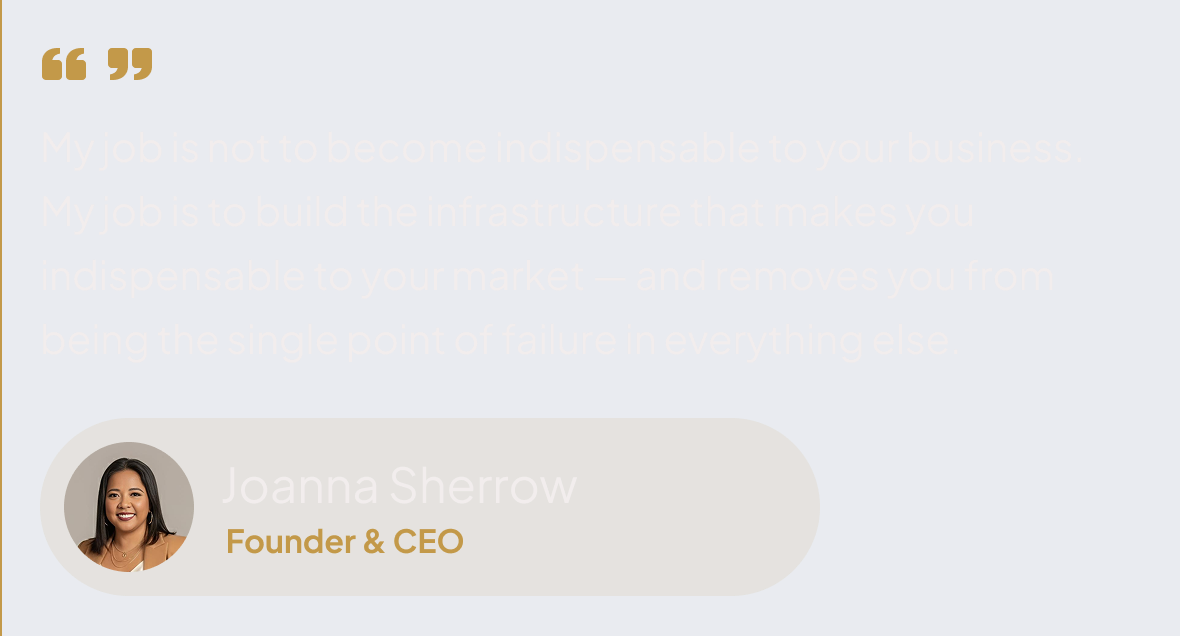
The Rollout and the Continuous Growth Cycle
The Rollout and the Continuous Growth Cycle
Getting systems live and keeping them running. Show It · Do It · Coach It. The Activation Flywheel. Quarterly audits and the Continuous Growth Cycle that turns short-term progress into compounding momentum.
— INSIDE THE BOOK -
— INSIDE THE BOOK -
The diagnosis your business has been waiting for.
The diagnosis your business has been waiting for.
Every expert-led business reaches a point where growth stops feeling like progress. Leads come in. Clients pay. The reputation is real. But the business only holds together because the founder is personally holding it — every decision, every relationship, every operational move routes through one person.
Every expert-led business reaches a point where growth stops feeling like progress. Leads come in. Clients pay. The reputation is real. But the business only holds together because the founder is personally holding it — every decision, every relationship, every operational move routes through one person.
Most founders diagnose this as a marketing problem. They buy more ads, hire someone new, join a mastermind, try a better CRM. The problem does not leave. Because it was never a marketing problem. It was an architecture problem — and no one sold them the diagnosis.
Most founders diagnose this as a marketing problem. They buy more ads, hire someone new, join a mastermind, try a better CRM. The problem does not leave. Because it was never a marketing problem. It was an architecture problem — and no one sold them the diagnosis.
Closing the Growth Gap is that diagnosis. Written for founders who are past the proving stage and ready to stop solving the wrong problem.
Closing the Growth Gap is that diagnosis. Written for founders who are past the proving stage and ready to stop solving the wrong problem.

- FROM THE AUTHOR -
- FROM THE AUTHOR -
The diagnosis your business has been waiting for.
The diagnosis your business has been waiting for.
Joanna Sherrow built her first company, SavvyChic Design, while flying the plane, fixing the engine, and repainting the wings midair. Every client was served. Every project was delivered. But the business only moved because she was in every seat designing, building, selling, and managing, all at once.
Joanna Sherrow built her first company, SavvyChic Design, while flying the plane, fixing the engine, and repainting the wings midair. Every client was served. Every project was delivered. But the business only moved because she was in every seat — designing, building, selling, and managing, all at once.
For years she thought the problem was having too many ideas. She had notebooks full of plans that never got executed. She hired people who still waited on her for every answer. She invested in systems that only worked if she was inside them running them. The problem kept shape-shifting and she kept solving the wrong version of it.
For years she thought the problem was having too many ideas. She had notebooks full of plans that never got executed. She hired people who still waited on her for every answer. She invested in systems that only worked if she was inside them running them. The problem kept shape-shifting — and she kept solving the wrong version of it.
What she eventually understood was that she did not have a strategy problem, a marketing problem, or a people problem. She had an architecture problem. The front end was strong. The spine did not exist. And every solution she had tried was designed for a different diagnosis.
What she eventually understood was that she did not have a strategy problem, a marketing problem, or a people problem. She had an architecture problem. The front end was strong. The spine did not exist. And every solution she had tried was designed for a different diagnosis.
She built the D.A.B.A.O. Framework out of that realization and then spent years refining it across dozens of client engagements.
She built the D.A.B.A.O. Framework out of that realization and then spent years refining it across dozens of client engagements.

- WHAT READERS SAY -
- WHAT READERS SAY -
The Book Lands Differently
When you recognize yourself in it.
The Book Lands Differently
When you recognize yourself in it.

"I have read dozens of business books. This is the first one where I finished a chapter and immediately opened my laptop to fix something."
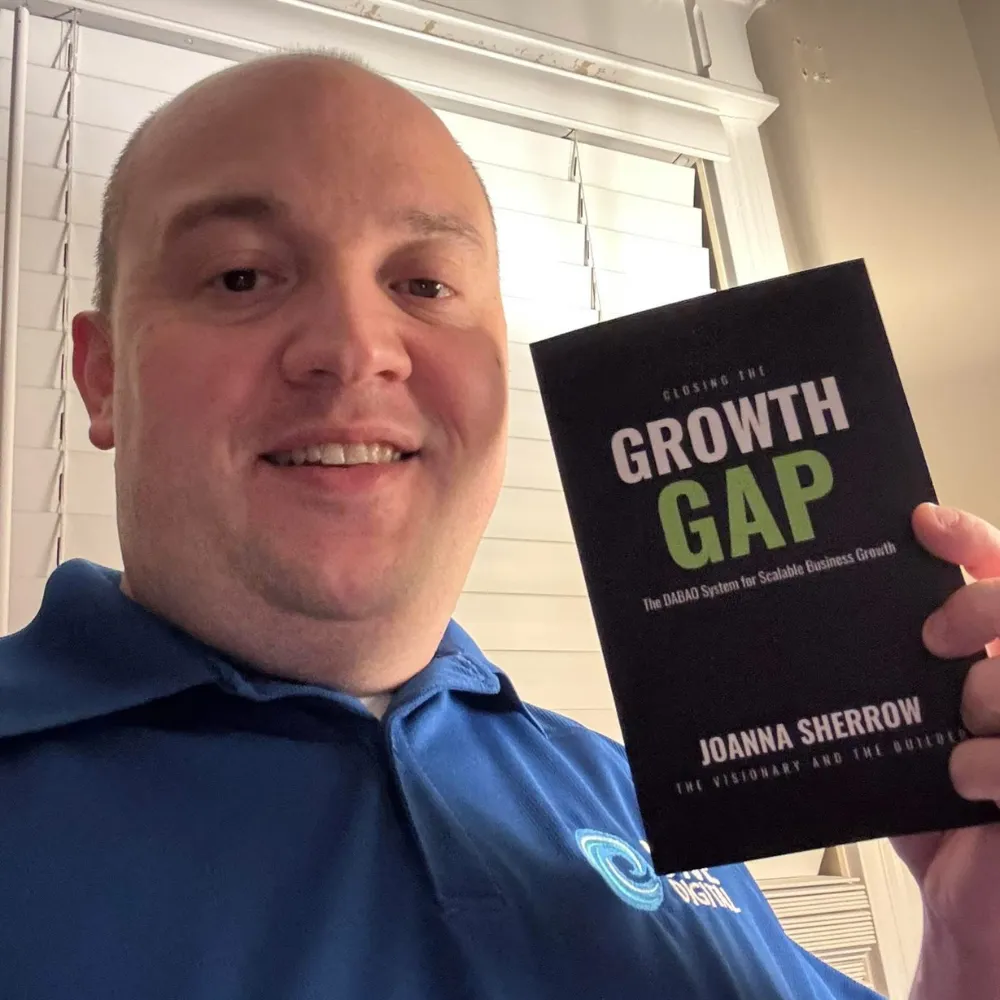
There is a lot to love about this book. Joanna puts so much usable information in small package. She not only shows you exactly what to do, she guides you along each step. Her DABAO system is eye opening and shows you how to map out your next steps. Excellent work!
Michelle Bunn
"Joanna writes the way she works — direct, precise, and without a word wasted. The D.A.B.A.O. Framework is the clearest system I have seen for this exact problem."
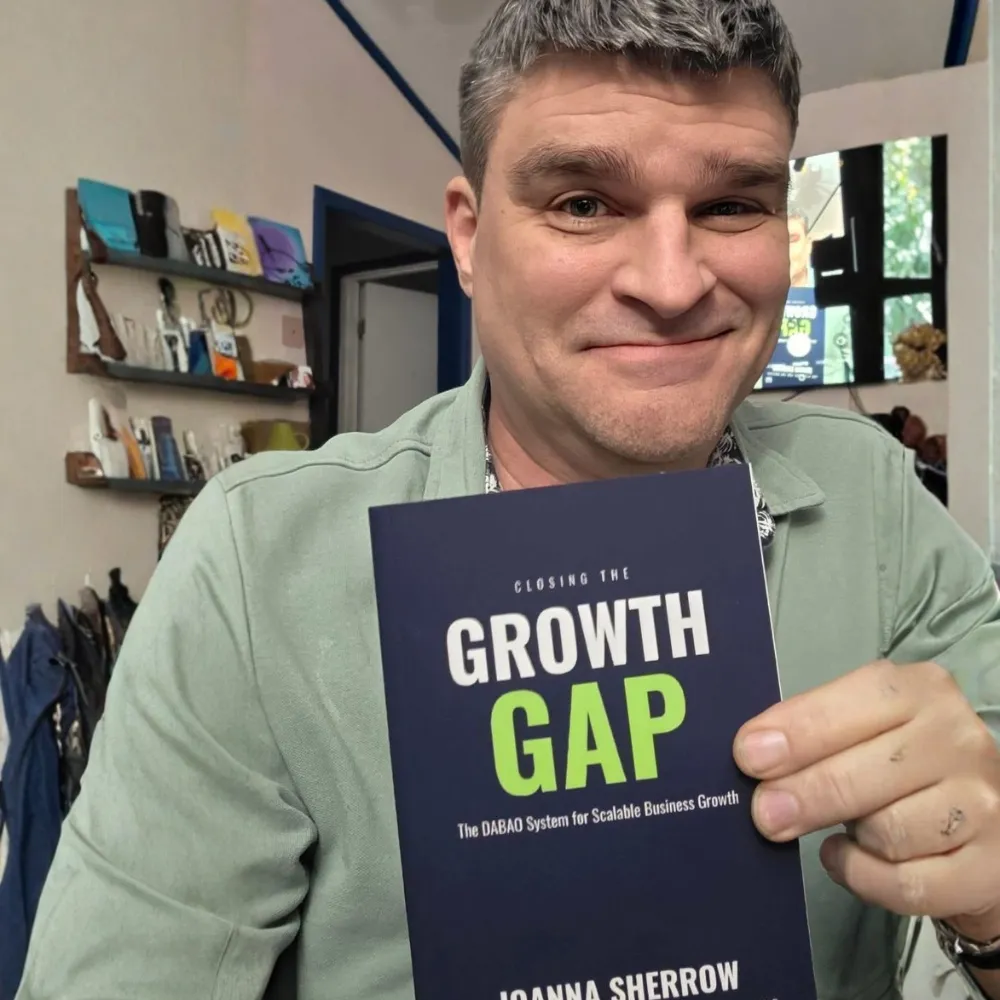
I would explain it by saying this book is fantastic for laying out a framework of how to build out the systems in your business. The information taught in this book is useful, not just for the specific systems that it talks about for example of the client journey, but can also be used for every process inside the company from employment journey to operations journey to financial journey. It all translates well.
Jen Rogers
"The Gap Scan alone is worth the price of the book. I thought I had a sales problem. I had a follow-up architecture problem. Completely different fix."
Excellent resource for entrepreneurs. Joanna does not sugarcoat it - we need systems that work and this book opened my eyes to the dual nature of what people often get stuck on. This is an easy read that takes you through a journey to evaluate your current business structure, user experience, and processes… I learned a lot!
Dr. S.










— AFTER THE BOOK
— AFTER THE BOOK
The book gives you the map.
We help you build it.
The book gives you the map.
We help you build it.
Read the book. Take the scorecard. Identify your Growth Gap type.
Then when you are ready to move from diagnosis to infrastructure here is where the
conversation begins.
Read the book. Take the scorecard. Identify your Growth Gap type.
Then when you are ready to move from diagnosis to infrastructure here is where the
conversation begins.
FREE - START HERE
Take the Gap Scan
The digital version of the scorecard from the book. Takes a few minutes. Shows you exactly where your business is leaking momentum, front end, back end, and the gap between them. Every client engagement at Growth Gap Co. begins with the Gap Scan. It is free and it is specific.
READY TO BUILD
Book a Strategy Call
If the book gave you clarity and you are ready to move from diagnosis to action the Strategy Call is a 60-minute working session. We examine your revenue architecture, confirm the diagnosis, and map the engagement that closes the gap. No pitch. No pressure. A real look at what needs to be built.
- GET THE BOOK -
- GET THE BOOK -
The Diagnosis starts
on page one.
The Diagnosis starts
on page one.
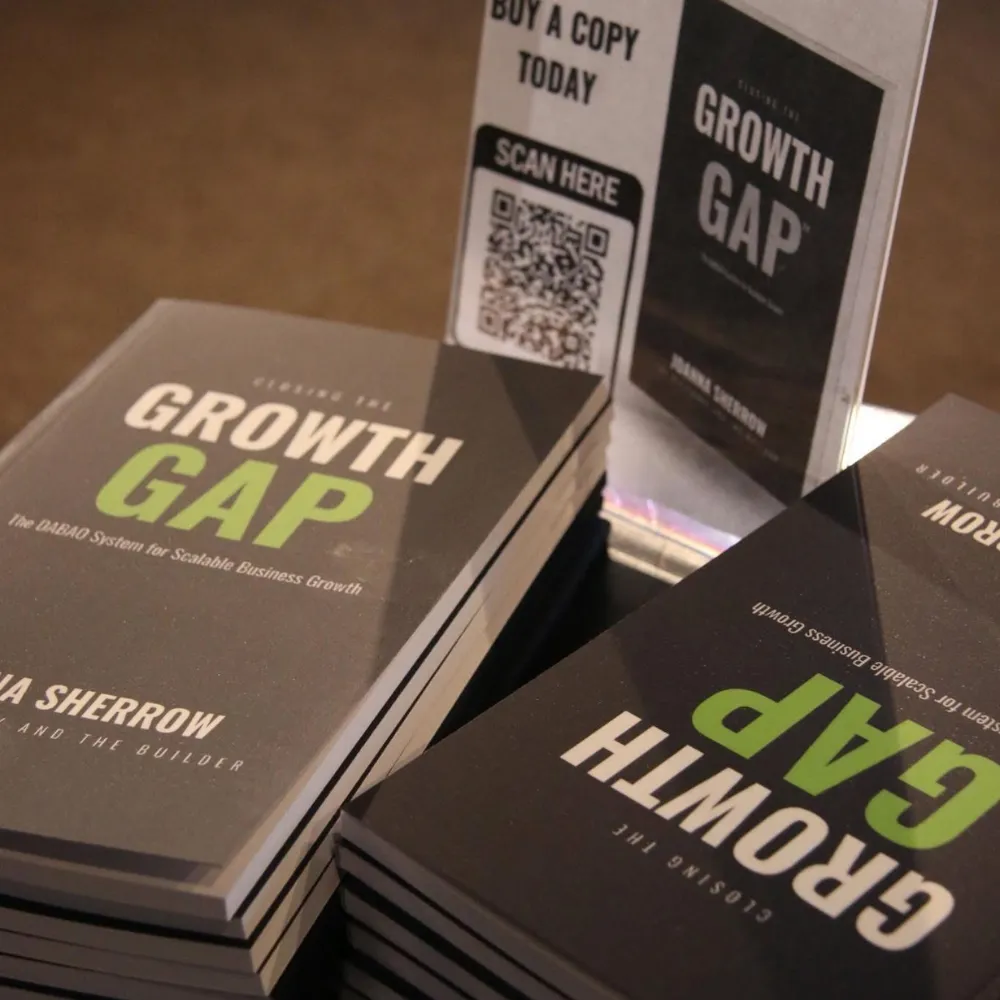
Available now on Amazon. Read it. Score your business. See your Gap. Then decide
whether you want to close it yourself — or with a team that has done it before.
Available now on Amazon. Read it. Score your business. See your Gap. Then decide
whether you want to close it yourself — or with a team that has done it before.
REVENUE INFRASTRUCTURE FIRM
FRACTIONAL CMO AND REVENUE SYSTEM FIRM
A proud minority woman-owned company serving clients across Kentucky and Florida, delivering strategic marketing, systems, and growth solutions.
WORK WITH US
Gap Scan Audit
Gap Scan Audit








© Growth Gap Co. All rights reserved
Creator of the D.A.B.A.O. Framework™